Het Steiger Rotterdam
Year: 2023
Location: Rotterdam
Context: MSc Architecture, TU Delft
Role: Individual project
Course / Studio: Heritage and Architecture Design Studio
Focus: Adaptive reuse, Heritage, Housing
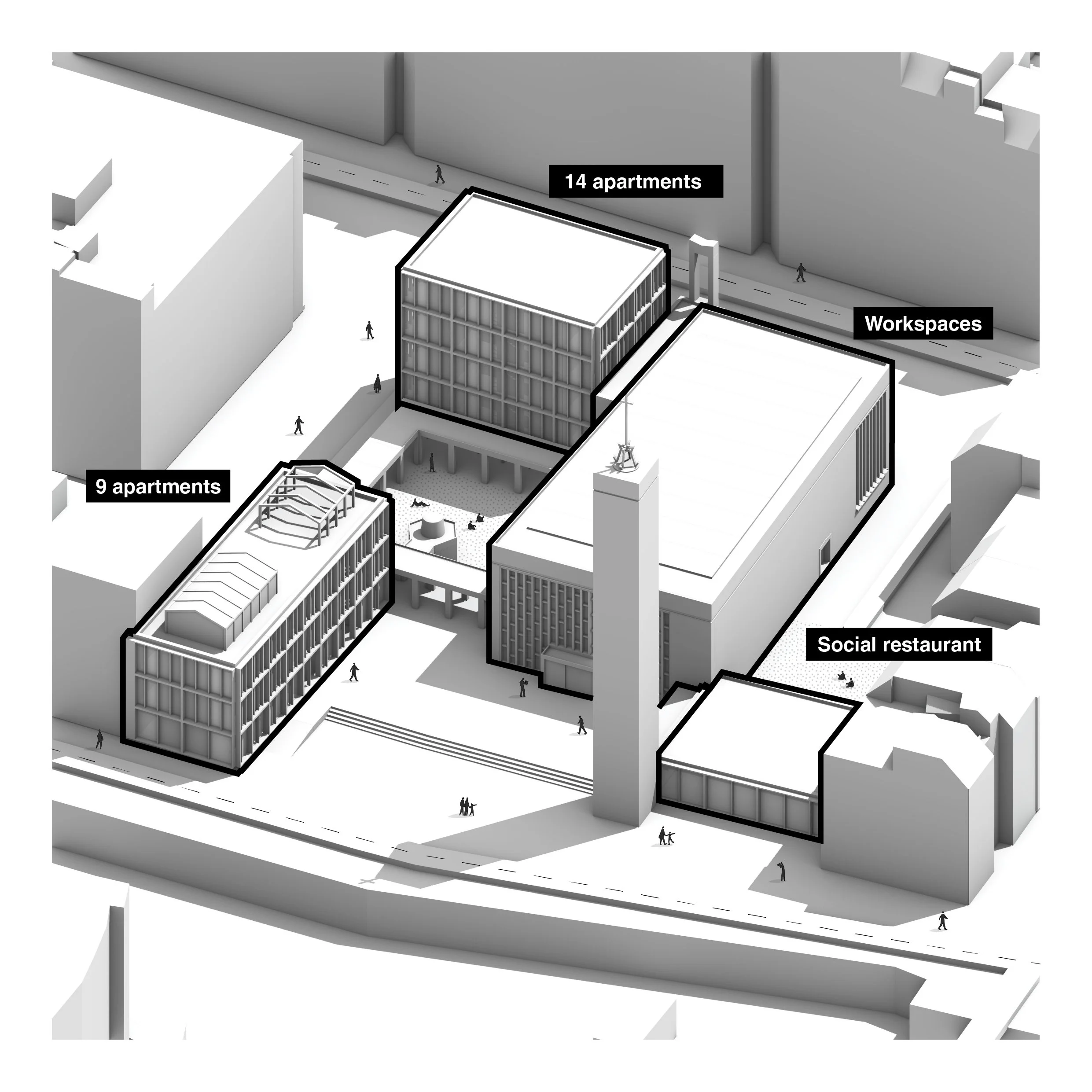
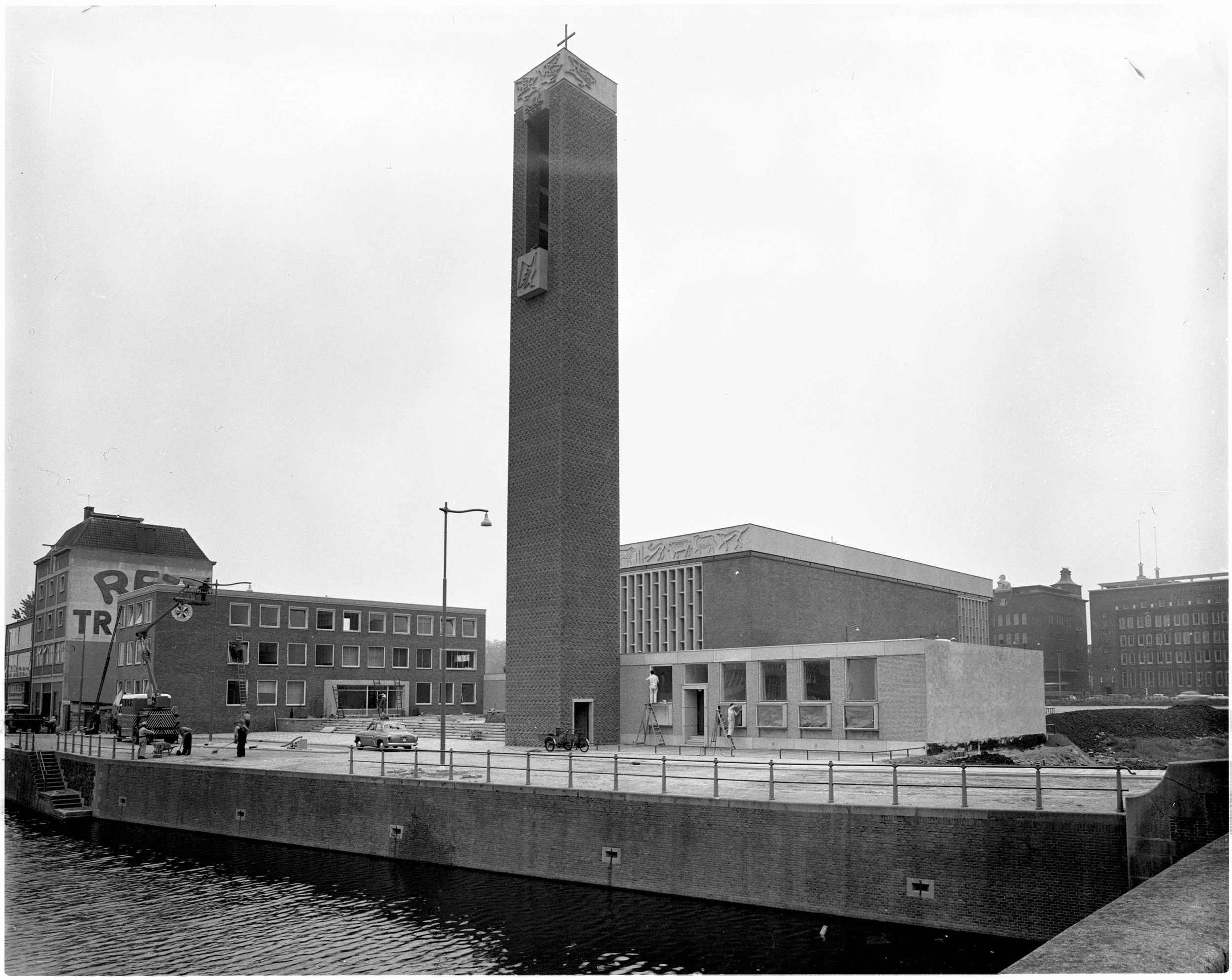
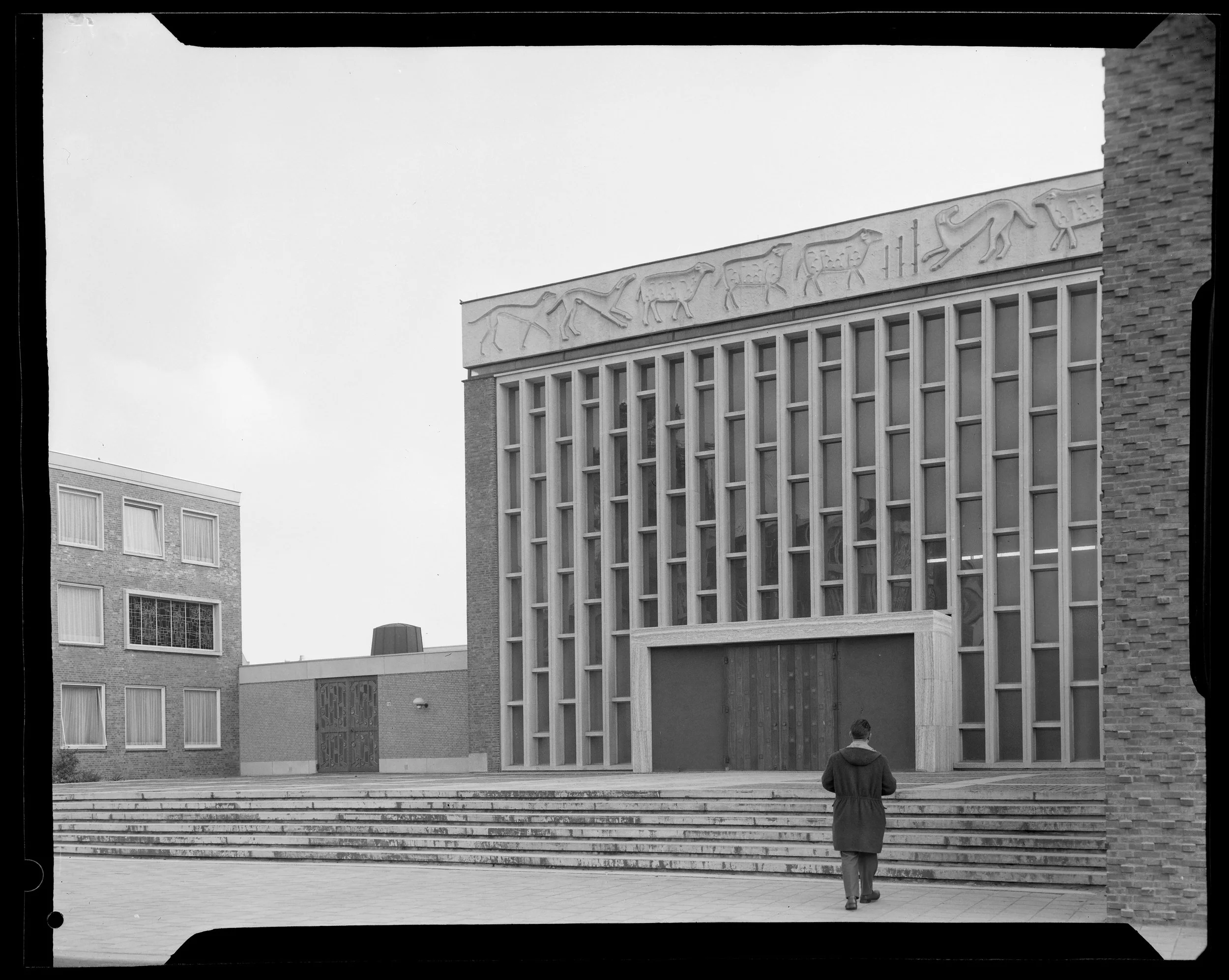
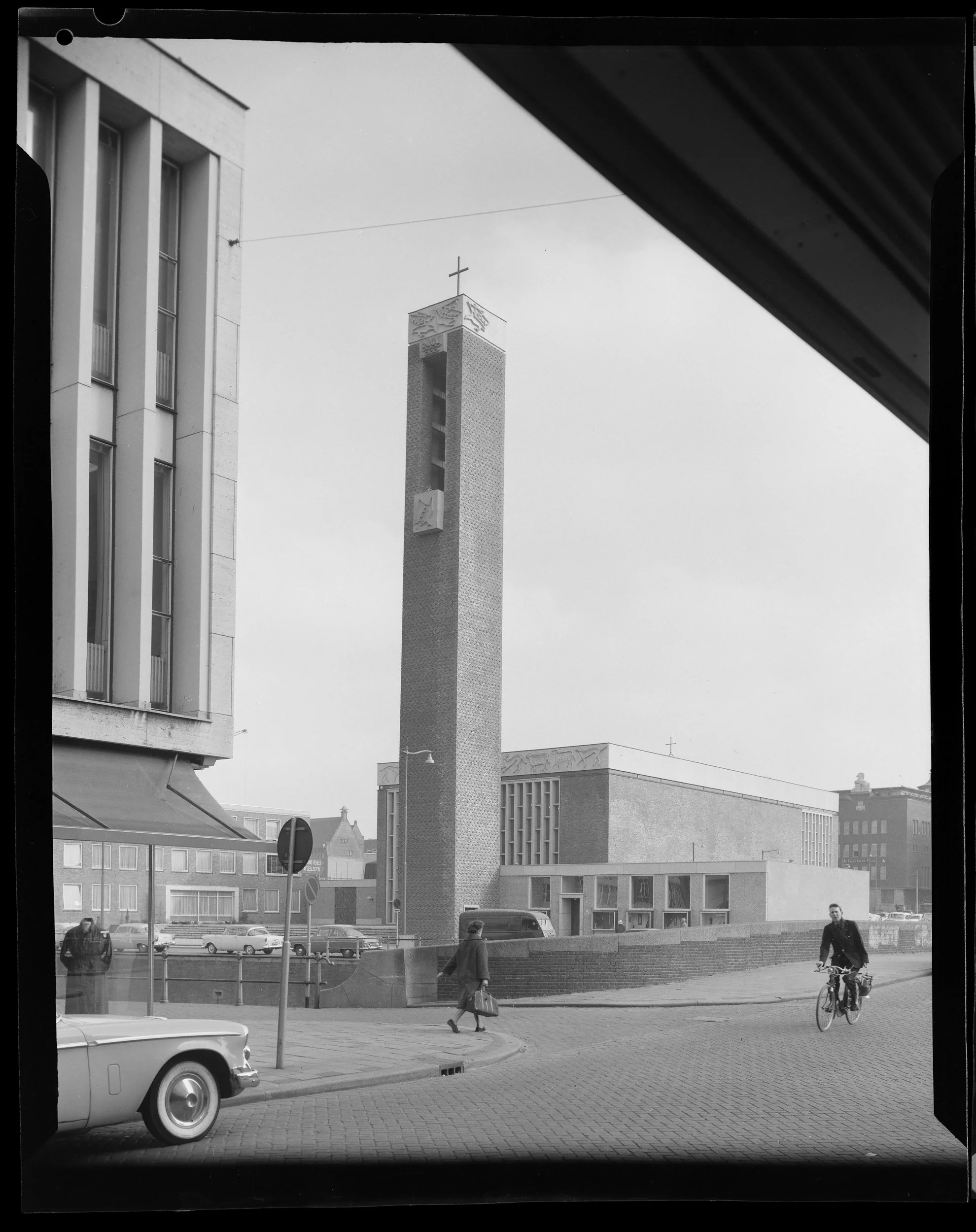
Het Steiger is a former church located in the city centre of Rotterdam, built in the period of post-war reconstruction following the bombardments of the Second World War. The complex consists of two church halls, a former monastery wing, an enclosed garden with a cloister walk, and a public square at its front. Designed in 1960 by Chris Knol of Kraaijvanger Architects, the building forms a distinct architectural ensemble within the post-war urban fabric.
The Steiger church occupies a central and highly accessible location, embedded in a dense and vibrant urban network and surrounded by landmarks such as the Markthal and the Central Library. This prominent position, however, also has a reverse side. When a church loses its original function, questions arise about the future of such a monumental building. How can new meaning be assigned to a place that once held a clear social and spiritual role? And what can be added to an already rich and intensively used urban context?
These questions form the point of departure for this project.

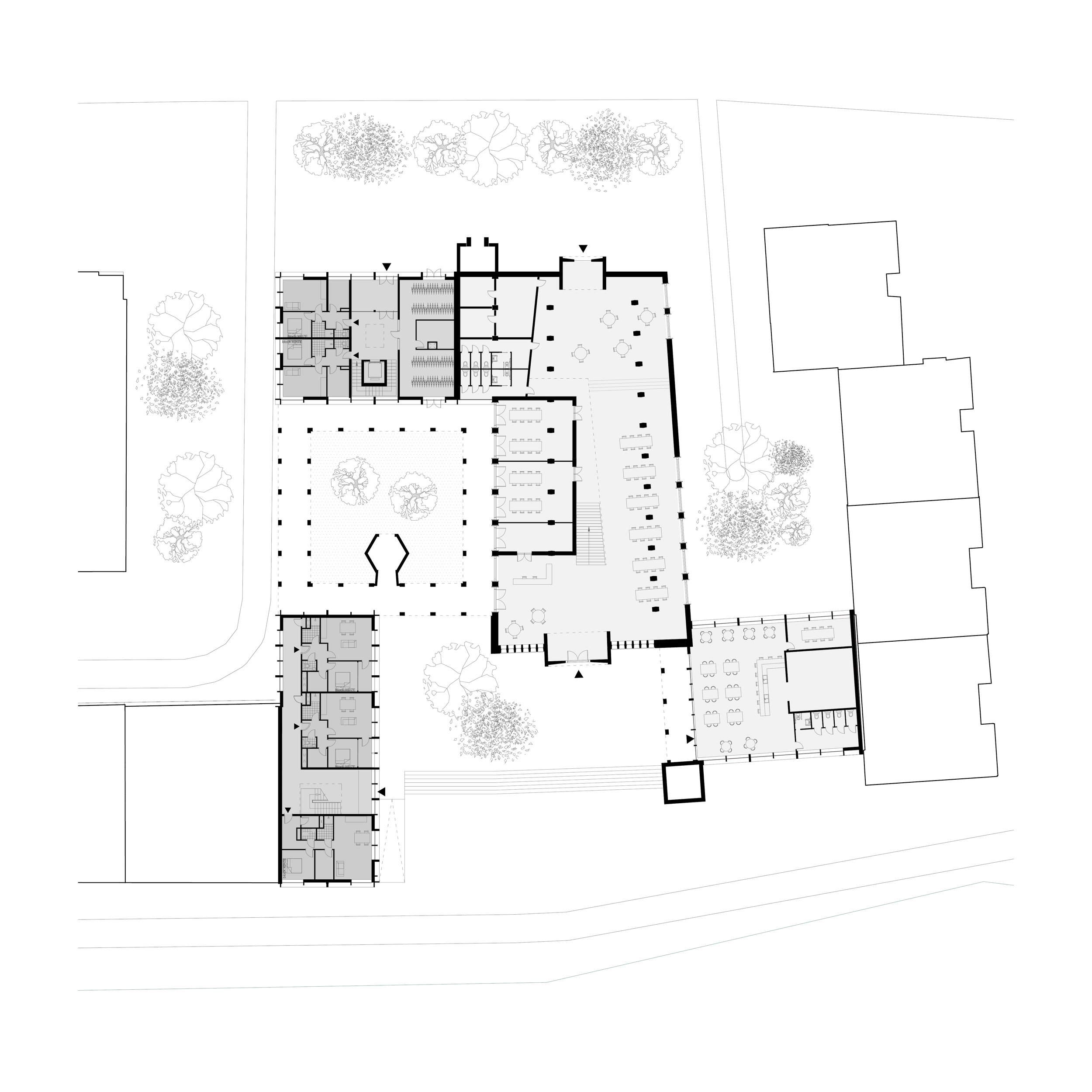
Design Approach
This project explores the adaptive reuse of Het Steiger by balancing preservation with carefully targeted transformation. The design starts from the architectural qualities of the existing ensemble, in particular the monumental glass façade of the main church hall and the characteristic cloister walk, which together define the identity of the complex. At the same time, the loss of the church’s original function makes the introduction of new uses unavoidable.
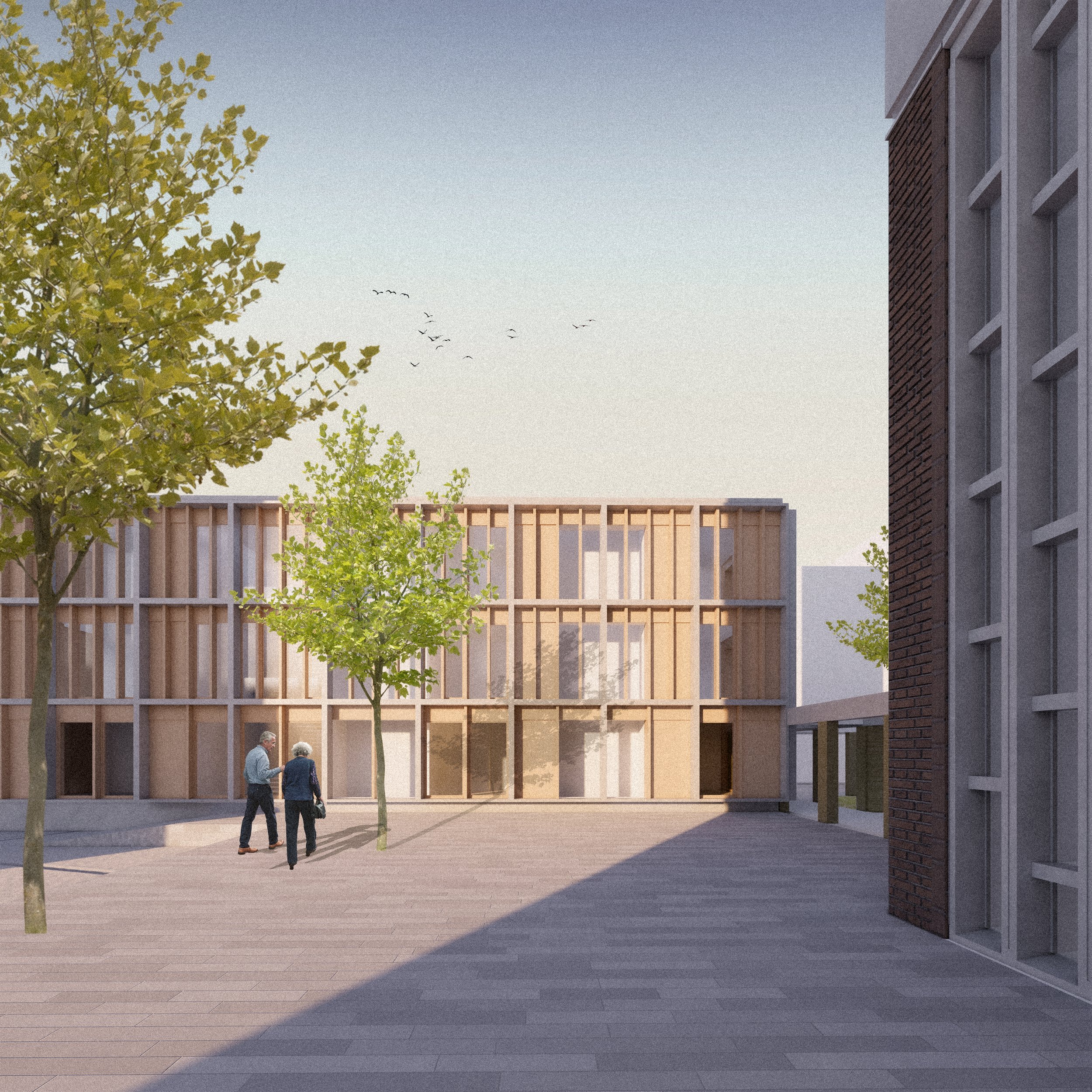
The intervention treats Het Steiger primarily as a monument rather than as an active urban or social hub. New programmes are inserted selectively, with each part of the ensemble receiving a different level of intervention. The former monastery wing, a building with limited architectural value, is transformed into housing, responding to the urgent need for dwellings in Rotterdam’s city centre.
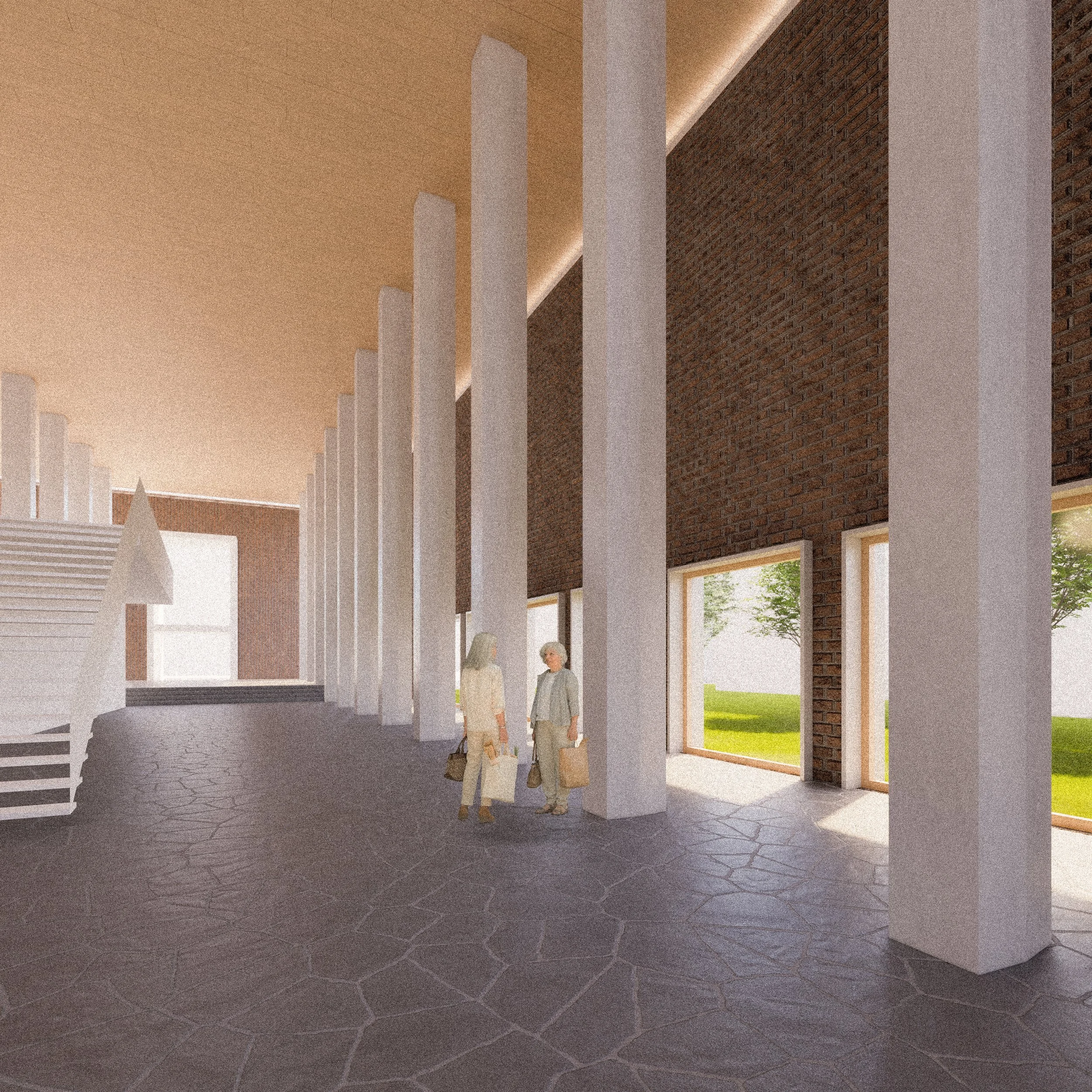
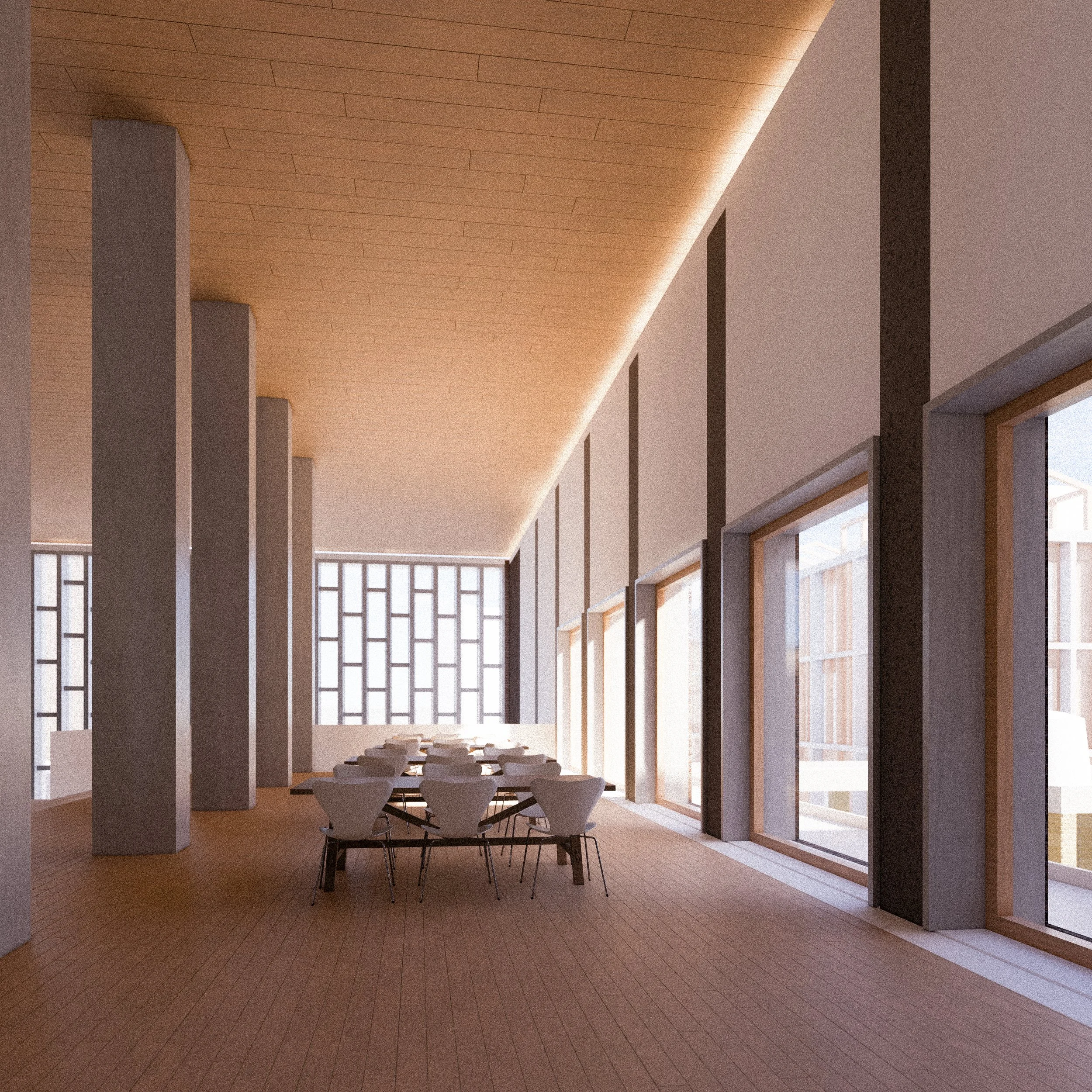
The main church hall retains its collective character and is reprogrammed as a semi-public study and work space, complemented by a restaurant. In this way, the social function of the church is not replaced, but reinterpreted.
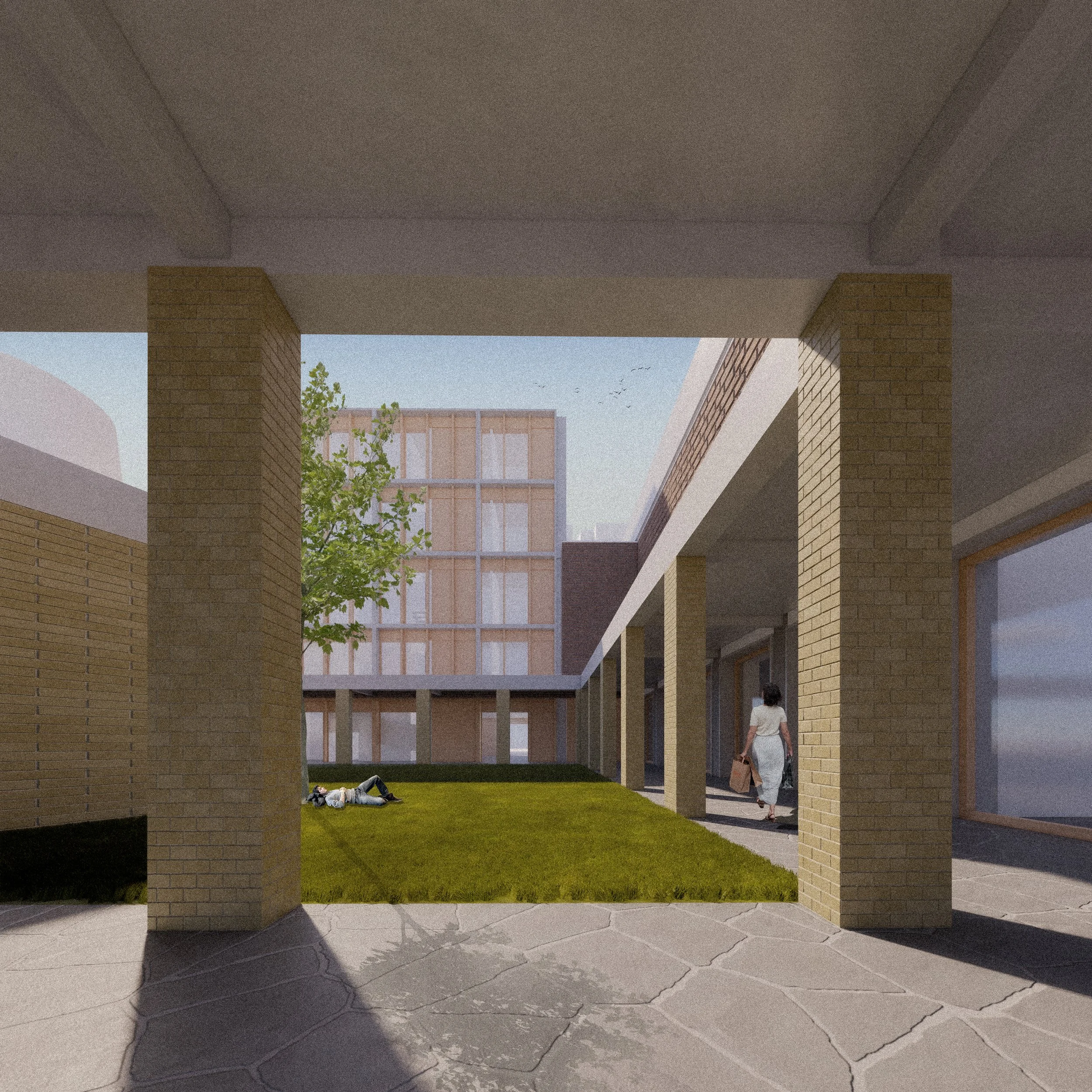
A key spatial move is the opening of the cloister walk, transforming it from a private circulation space into a public ring that connects the different parts of the ensemble around a shared inner garden. Rather than making the complex more prominent in the already fragmented inner city, the project focuses on openness, accessibility and subtle activation, allowing Het Steiger to re-enter the urban fabric without losing its architectural restraint.